The Construction of Democratic Governance in Latin America
The Constructing Democratic Governance series, coordinated by Michael Shifter at Inter-American Dialogue and Jorge Dominguez at Harvard University, is concerned with democratic institutions and practice in the hemisphere. These volumes (the third edition was published in 2008) undertake a systematic and wide-ranging examination of the state of democratic governance in Latin America. Previous editions of Constructing Democratic.
Governance have been widely used in college and university classes concerned with democracy in Latin America and enjoyed by many members of the general public. In addition, the previous editions have been cited frequently by policy specialists grappling with the complicated issues surrounding democratic progress in the region. The book series entitled The Construction of Democratic Governance in Latin America and edited by Michael Shifter, President of Inter-American Dialogue, and Jorge Dominguez, Professor and Vice Provost for International Affairs at Harvard University, examines democratic institutions and practices in Latin America. These volumes (the third edition was published in 2008) offer a broad systematic examination of the state of democratic governance in the region.
Despite the progress made in recent years, Latin America faces challenges and possible obstacles to democratic governance and the rule of law. In light of these problems, the project has examined a wide range of factors that influence democratic political development in the region.
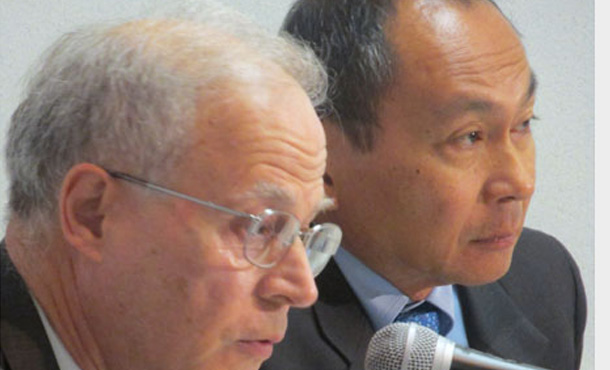
With the sponsorship of the Vidanta Foundation, a meeting was held in Washington in which a number of distinguished analysts, academics and members of the Washington political community who are interested in Latin America participated. The meeting took place at the offices of Inter-American Dialogue on October 6 and 7, 2010, and included 2 main sessions: the first was an event for the representatives of the Washington political community (ambassadors and embassy personnel, Congressional staff and Executive branch officials, representatives of the multilateral institutions and of non-governmental groups dedicated to promoting and defending democracy and human rights, think tank analysts, etc.) and the second was a workshop for the authors of each chapter of what will be the fourth volume of the series The Construction of Democratic Governance in Latin America.
The issues analyzed were: constitutional reforms made by Latin American presidents with the purpose of eliminating limits on their power, the growing influence of the Executive branch over the Judicial branch in many Latin American countries, corruption in governmental institutions and the challenges that that presents to democracy, advances in terms of social inclusion (in particular the impact of the political participation of women, indigenous groups and African descendants.); the effects of the growing restrictions on the communications media and on opposition parties in some Latin American countries, and organized crime and drug trafficking and the threats that they present to democratic institutions.
The volume that contains the essays on the above-mentioned themes will be published by Johns Hopkins University Press in April 2013.
SEE PDF